A Retired School Guidance Counselor Who Watched 200 Parents Lose and Regain Connection With Their Teenagers Reveals the Reconnection System That Reaches the Child Who Has Started Pulling Away. Before the Distance Becomes Permanent.
He used to tell her everything. What happened at school. Who said what. What he was thinking about. Now she gets one-word answers. A closed bedroom door. A phone that gets hidden when she walks in. 8 months of a child who used to be hers becoming a stranger she lives with.
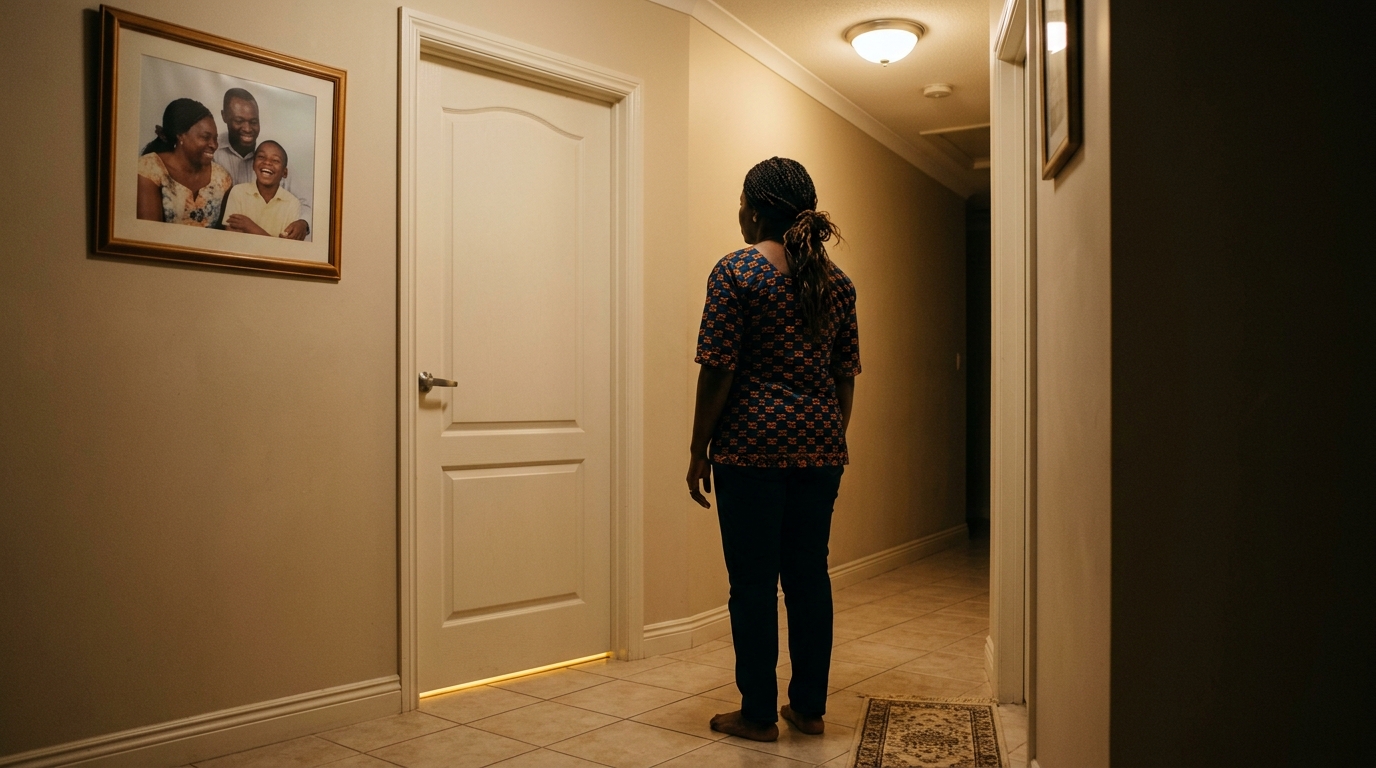
The door.
It used to be open. Always. When he was 8, 9, 10, 11, 12. The bedroom door was open. You could see him. Hear him. Walk past and he would call out: "Mummy, come and see this." Or: "Mummy, guess what happened today." The door was an invitation. An open channel. A sign that you were welcome in his world.
Then the door closed. Not dramatically. Not with a slam. Quietly. One evening he closed it when he got home from school. The next day, closed again. The day after. By the time you noticed it was a pattern, the door had been closed for weeks. And when you knocked, the answer was: "I'm fine." Or: "Nothing." Or silence.
He is 16 now. The door has been closed for 8 months. And the door is not just a piece of wood on hinges. It is the physical representation of the wall your child has built between you and his world. A wall you don't understand. A wall you didn't build. A wall you don't know how to get past without making it higher.
"My son is 16. He used to be my closest person. We talked about everything. 8 months ago, something changed. I don't know what. I don't know when exactly. But the talking stopped. One-word answers. 'How was school?' 'Fine.' 'What did you eat?' 'Food.' 'Are you okay?' 'Yes.' Every question met with the minimum words required to make me go away."
"He takes his phone into the bathroom. He locks his door when he's home. He doesn't eat with the family anymore -- he takes his plate to his room. When his friends call, he speaks freely. I hear him laughing through the door. Animated. Present. The person he used to be with ME, he is with THEM. I am on the other side of the door listening to my own child be happy with everyone except me."
"I am 45 years old. I have raised this child for 16 years. And I am losing him. Not to drugs. Not to bad friends (as far as I know). Not to anything I can name or fight. I am losing him to a distance I don't understand, can't explain, and don't know how to close. And every day the door stays closed, the distance grows. I can feel it. He is pulling away. And I don't know if there's a point where the pulling becomes permanent."
If your teenager has pulled away, if the talking has stopped, if the door is closed, if you hear them being happy with everyone except you, if you are afraid the distance is becoming permanent, keep reading.
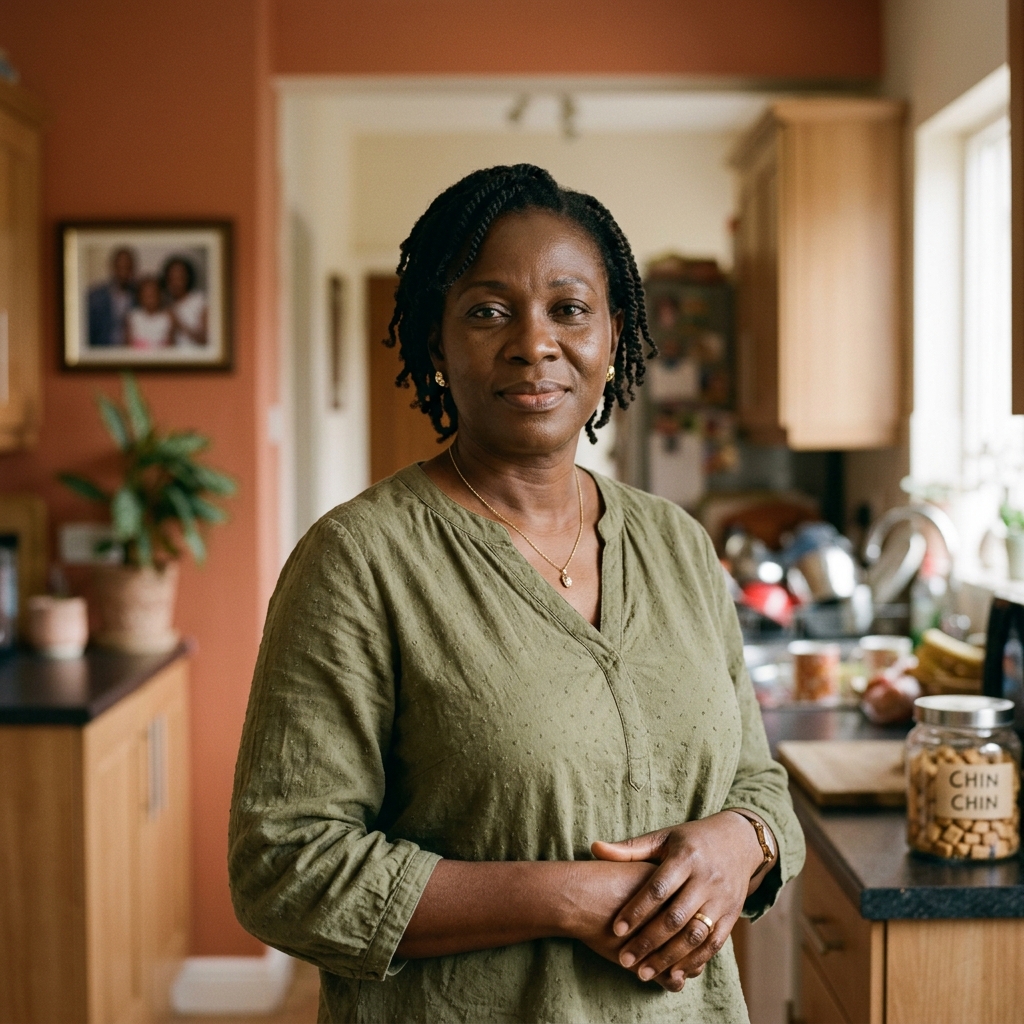
Folake D.
45. Lagos. Mother of a 16-year-old who used to tell her everything. Until the door closed. Until Mrs. Adeyemo showed her: the door doesn't open from the outside.
pulling away
answers
that reached him
"Mummy, guess what happened today"
He came home and told her everything. School, friends, thoughts, fears, dreams. Unprompted. The words flowed. She was his first audience for everything.
"Fine."
"How was school?" "Fine." "What happened?" "Nothing." "Are you okay?" "Yes." Three questions. Three walls. The minimum words to make her leave.
Open door. "Come and see this."
The bedroom door was an invitation. She could walk in anytime. He wanted her there. His world was her world.
Closed door. Knock first. "I'm busy."
The door closes when he gets home. Knocking produces "I'm fine" or silence. His world is behind a door she is not welcome through.
Family dinner. Full conversation.
He sat at the table. He talked. He laughed. He was present. Dinner was connection time.
Takes his plate to his room.
He takes the food and disappears. The empty chair at the dinner table is louder than any argument. He eats alone. They eat without him.
"What's Wrong With You?"
Confrontation. Demanding an explanation. He shut down harder. The question sounded like an accusation. Accusation builds walls. It doesn't open doors.
Giving Him Space
"He'll come back when he's ready." 3 months of space. He didn't come back. The space became the new normal. Distance that isn't bridged becomes distance that's accepted.
Taking Away the Phone
Punishment. Confiscating the device he connects to his friends through. The pulling away intensified. Because the phone wasn't the cause. It was where he went AFTER pulling away from her.
"We Need to Talk"
The four words every teenager dreads. He sat on the sofa. Arms crossed. One-word answers for 20 minutes. She talked. He endured. Nothing changed. Because forced conversation is performance, not connection.
Buying Things
New trainers. New headphones. The gifts were accepted. The door stayed closed. Because gifts say "I can provide." They don't say "I can listen." And listening is what she hasn't been invited to do.
Asking His Friends' Parents
"Is everything okay with him?" Humiliating for both of them. Information about her own child gathered secondhand. The distance isn't a mystery to solve from the outside. It is a wall to dissolve from within.
A parents' evening at the school. Mrs. Adeyemo. 58. Retired after 30 years as a secondary school guidance counselor. She had watched hundreds of parents stand outside their teenager's closed door, knocking harder, louder, more desperately. And she had watched the parents who got in. The difference was not volume. It was approach.
Stop Knocking
The counterintuitive first step. Stop the questions. Stop the "we need to talk." Stop knocking on the door. Not because you are giving up. Because every knock that gets rejected reinforces the wall. The method explains what to do INSTEAD of knocking: specific actions that reduce the pressure the teenager feels around you. When the pressure drops, the wall begins to lower.
The Parallel Presence
Being in the same space without agenda. Not "quality time" (which feels forced). Parallel presence: you are in the kitchen, he is in the kitchen. You are watching something, he walks through. No questions. No agenda. No "since you're here..." Just presence without demand. The method provides specific parallel presence practices that create proximity without pressure.
The Side-Door Conversations
Teenagers don't do face-to-face. Eye contact conversations feel like interrogation. The method teaches "side-door" approaches: conversations that happen while doing something else. In the car. While cooking. While walking. The shared activity becomes the door. Not "sit down, we need to talk." "I'm making dinner, want to help?" The method provides specific side-door openers that have reached teenagers who shut down every direct approach.
The Listening Reset
When the teenager begins to open (and they will, when the pressure drops and the side-door opens), HOW you listen determines whether they close again. The Listening Reset teaches: no fixing, no lecturing, no "when I was your age," no shock reactions. Pure reception. The teenager shares something. You receive it. Without judgment. Without advice. Without using it against them later. The method provides the exact response framework that keeps the door open once it cracks.
The New Connection
The relationship that emerges is different from the one you had when they were 10. It is not a parent-child dynamic where they tell you everything. It is a parent-teenager dynamic where they tell you what matters and trust you with it. The method helps you recognise and accept the new shape of the connection. Not less. Different. Appropriate for their age. And real.
The hardest step. Stopping the daily question she had asked every day for 11 years. "How was school?" The question that now produced "fine." She stopped asking. Not because she stopped caring. Because the question had become a wall. The same question, same time, same expectation, same one-word answer, same disappointment. The pattern was cemented. Breaking the pattern meant removing the question.
Day 3 without the question. She was in the kitchen. He came home. She said: "There's chin chin on the counter if you want." Not a question. Not a demand. An offering. No response expected. He took the chin chin and went to his room. But he paused at the kitchen door for 2 seconds. 2 seconds longer than he had paused in 8 months. The pressure had dropped. He felt it.
She was cooking. Jollof rice. His favourite. She didn't call him. She didn't announce it. She just cooked. He came into the kitchen for water. She said nothing. Kept cooking. He leaned against the counter. Stood there. Didn't speak. Neither did she. Parallel presence. 4 minutes of silence in the same room.
Then: "Who taught you to make jollof rice like that?"
A question. FROM him. Not an answer to her question. His own question. Voluntary. Unprompted. About her. In 8 months, it was the first question he had asked her that wasn't logistical ("Where are my socks?"). The side-door was the cooking. The kitchen was the hallway. And the hallway felt safe enough for him to open his door. Not all the way. A crack. Enough to ask about jollof rice. Enough to start.
A Tuesday evening. Folake walked past his bedroom. The door was open. Not wide open. Ajar. She could see him lying on his bed, phone in hand, watching something. He glanced up. Didn't close the door. Didn't say "I'm busy." Just glanced, then looked back at his phone. The ajar door said: you can exist near me. I am not hiding from you. You are not a threat.
"I didn't walk in. The method taught me: an open door is not an invitation to enter. It is permission to be near. I stood in the hallway for a moment. He knew I was there. He didn't close the door. That was enough. After 8 months of a closed door, an ajar door is a revolution."
"Did the method make my son 10 years old again? No. He is 16. He is becoming his own person. The pulling away is part of that. But pulling away doesn't have to mean pulling apart. The method showed me the difference: he needed space to grow. He didn't need me gone. He needed me present without pressure. Close without controlling. Available without demanding. The door opened when I stopped trying to push it and started making the hallway safe enough for him to open it himself."
"The Parallel Presence technique changed everything. I stopped forcing 'quality time' and started just BEING in the same room. No agenda. No questions. My 14-year-old daughter started sitting in the living room again after 5 months of hiding in her room. Proximity without pressure."
"The Side-Door Conversations. In the car. Not face to face. Not 'we need to talk.' I was driving my 17-year-old son to football practice. I said nothing for 10 minutes. Then he said something about a friend. Voluntarily. The car is the side door. The method taught me this."
"The Listening Reset saved us. My daughter told me something about a boy at school. My instinct was to lecture. The method taught me to receive without fixing. I listened. She told me more. For the first time in a year, she told me more. Because I didn't use the first thing against her."
"I'm in London. Nigerian. My 15-year-old was pulling away AND absorbing a culture I don't fully understand. The method helped me stop fighting the culture and start connecting with the person inside it. He's still 15. He still listens to music I don't understand. But the door is open."
"'Stop Knocking' was the hardest step. Every instinct said keep pushing. The method said stop pushing. Within 2 weeks the dynamic shifted because I was no longer the person demanding entry. I was the person standing in a safe hallway. He came out when he was ready."
"This method does NOT promise your teenager will become 10 again. It promises a new connection appropriate for their age. My son doesn't tell me everything anymore. But he tells me what matters. And when it matters, the door is open. That is enough. That is everything."
I documented Mrs. Adeyemo's system because no parent should stand outside their child's closed door wondering what went wrong. No parent should listen to their teenager laughing with friends through a wall while they sit in silence in the next room. No parent should confuse pulling away with losing. And no parent should push harder when the answer is to stand still. The door opens from the inside. The method makes the hallway safe enough for your child to open it.
Get Your Child Back
How to reach a teenager or young adult who has started pulling away. Before the distance becomes permanent.
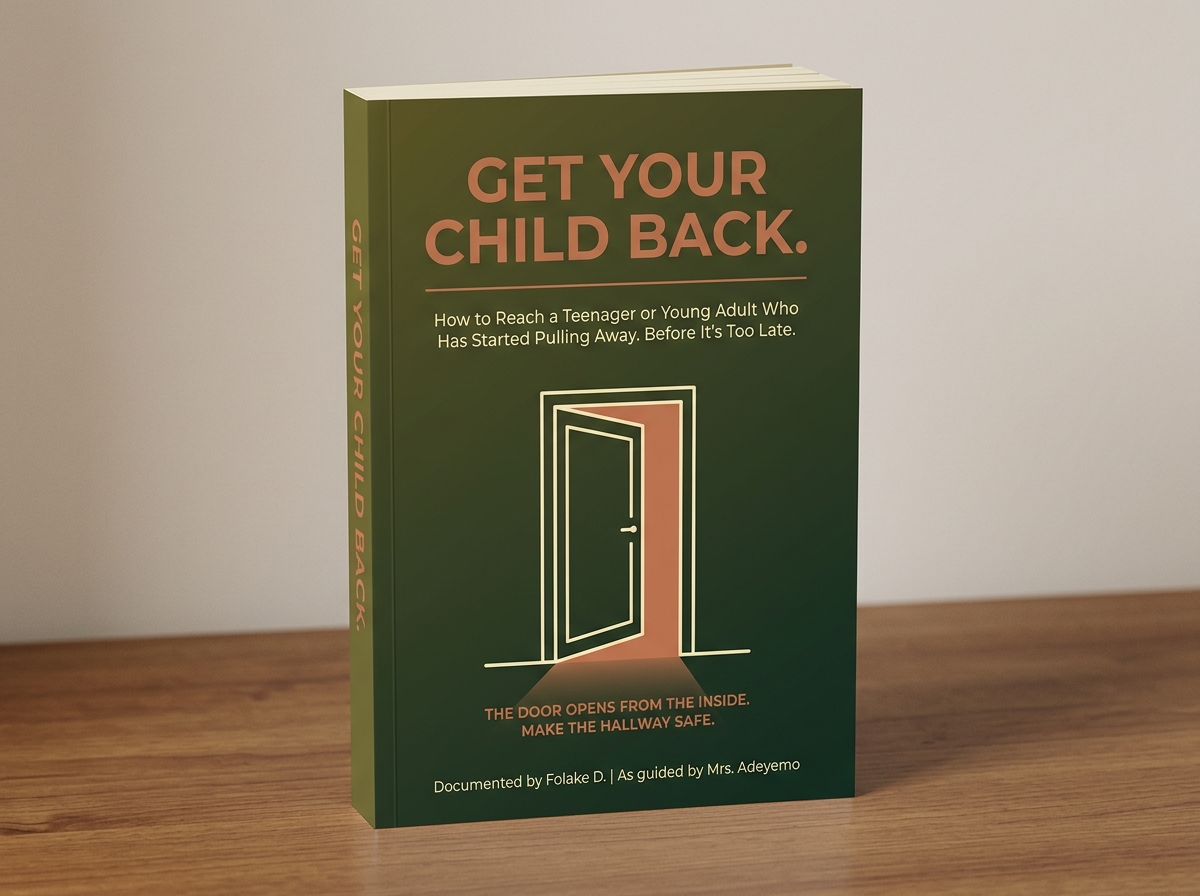
Stop Knocking (The Pressure Release)
Why every instinct is wrong. What to do INSTEAD of asking, demanding, confronting. The specific actions that lower the pressure your teenager feels around you.
The Parallel Presence Practices
Being in the same space without agenda. Specific practices that create proximity without pressure. Not forced quality time. Natural co-existence that rebuilds safety.
Side-Door Conversations
In the car. In the kitchen. While walking. The approaches that work when face-to-face fails. Specific openers that have reached teenagers who shut down every direct attempt.
The Listening Reset
When they do open: no fixing, no lecturing, no shock, no using it against them. Pure reception. The response framework that keeps the door open once it cracks.
The New Connection
The relationship at 16 is not the relationship at 10. How to recognise, accept, and build the new shape of connection. Not less. Different. Real.
Instant download. Both bonuses included. 21-day guarantee.
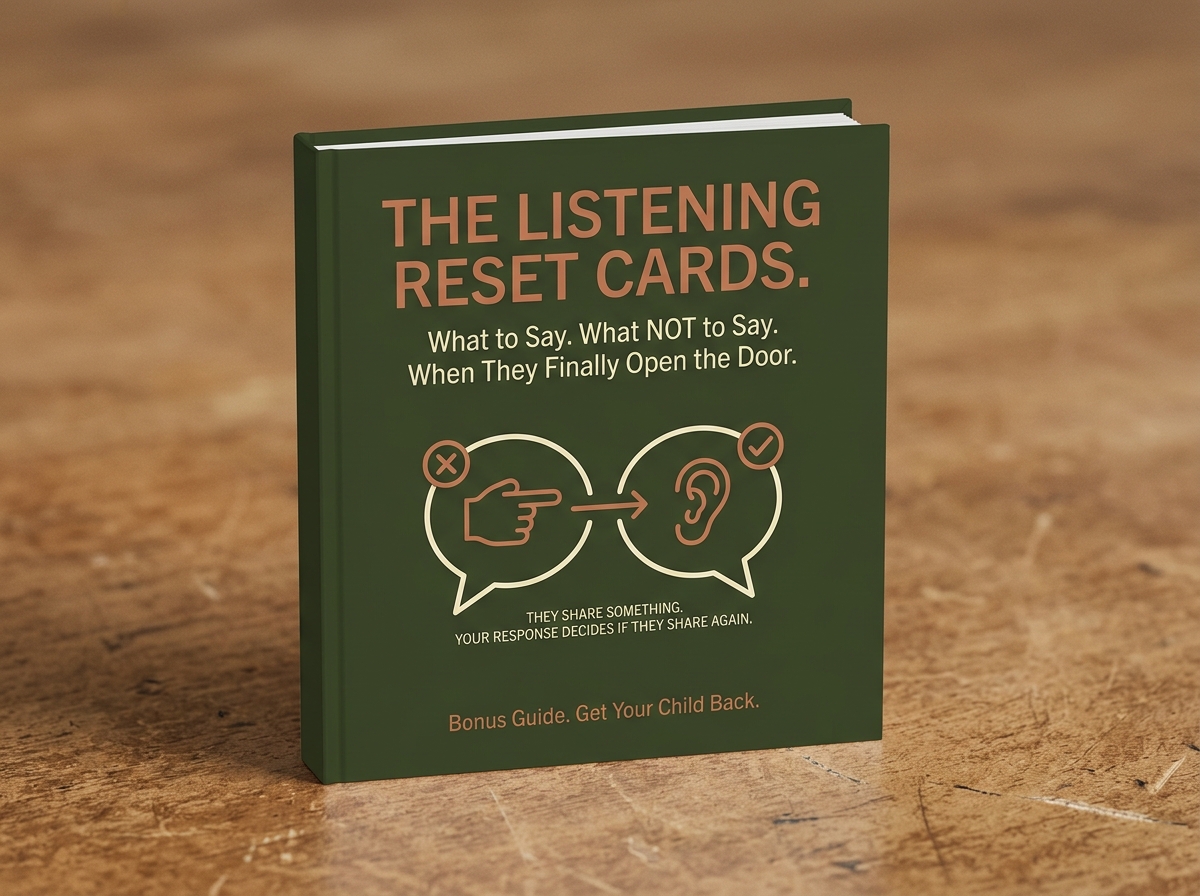
The Listening Reset Cards
Printable cards with response frameworks for the 5 most common things a teenager might share: school stress, friendship problems, romantic interest, identity questions, and fear. What to say. What NOT to say. Keep them in your pocket.
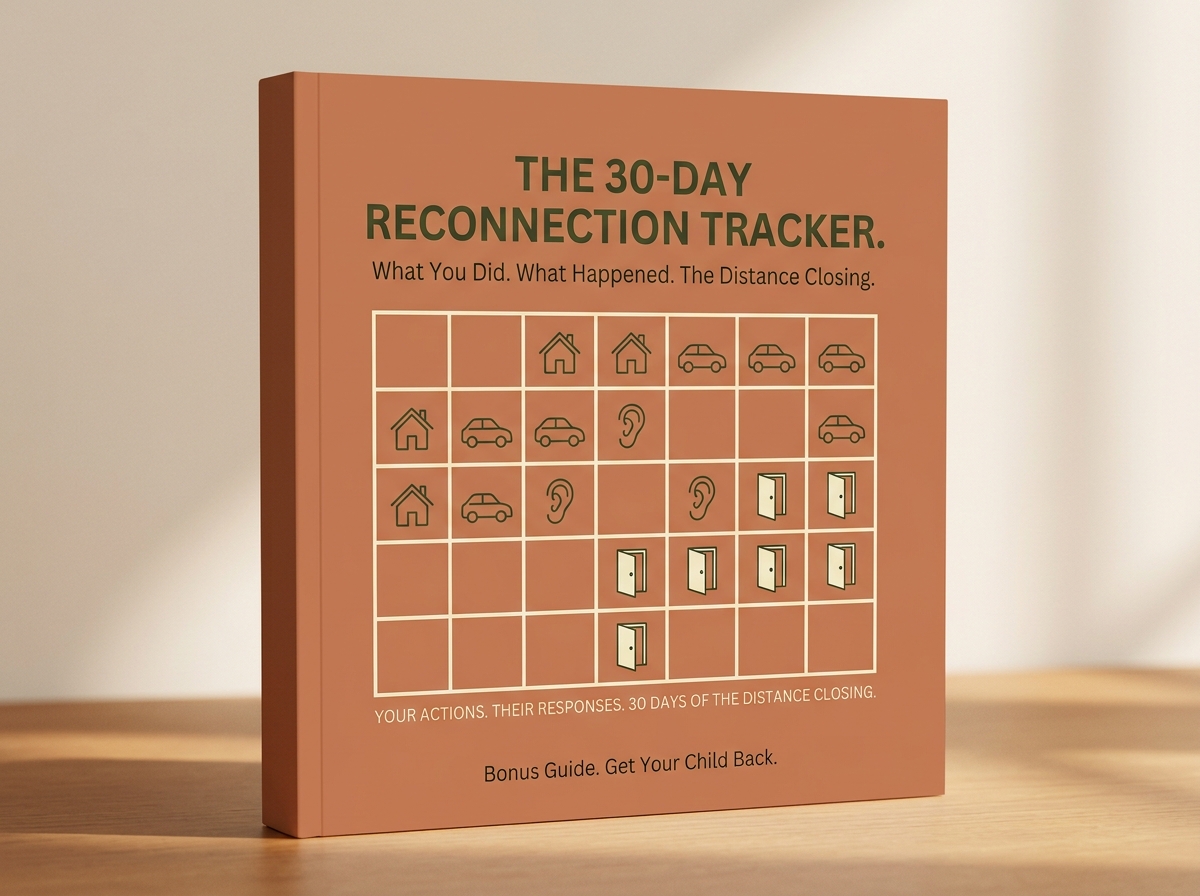
The 30-Day Reconnection Tracker
Daily log: what you did (parallel presence, side-door, nothing). What happened. Any change. 30 days of data showing the distance closing. The tracker reveals which approaches YOUR child responds to.
21-Day Conditional Guarantee
Follow the method for 21 days. If the dynamic hasn't shifted, if the pressure hasn't dropped, if there isn't at least one moment where your child was more present than before, full refund. Keep both bonuses. This guarantee does NOT promise your teenager will become 10 again. It promises a path toward reconnection.
The door opens or you pay nothing.
Another Month of the Closed Door
Another 30 days of one-word answers. Another dinner with an empty chair. Another evening listening to your child laugh with friends through a wall while you sit in silence. Another month of the distance growing while you knock harder and the door stays shut.
The door doesn't open from the outside. Knocking harder doesn't work. It never has.
Make the Hallway Safe
Week 2: The pressure drops. He pauses 2 seconds longer at the kitchen door. Week 4: He asks a question. Voluntary. Unprompted. Week 8: The door is ajar. Not wide open. Ajar. Enough.
N9,800. The door opens from the inside. The method makes the hallway safe enough for your child to open it.
P.S. #1: Is the door closed right now? As you read this, is your teenager behind a closed door in your own home? The method starts with Step 1: Stop Knocking. N9,800 to start.
P.S. #2: When was the last time your teenager asked you a question that wasn't logistical? Not "where are my socks?" but a real question. About you. About life. If you can't remember, the side-door conversations are waiting in the method.
P.S. #3: Mrs. Adeyemo: "The child who shuts the door is not saying 'go away forever.' They are saying 'I need you to come differently.' The method teaches you the different way. The way that doesn't push. The way that waits. The way that makes the hallway safe. And when the hallway is safe, the door opens. From the inside. Every time." N9,800 for the way in.